

What is Earthing in Electrical Systems and Why is it Important?
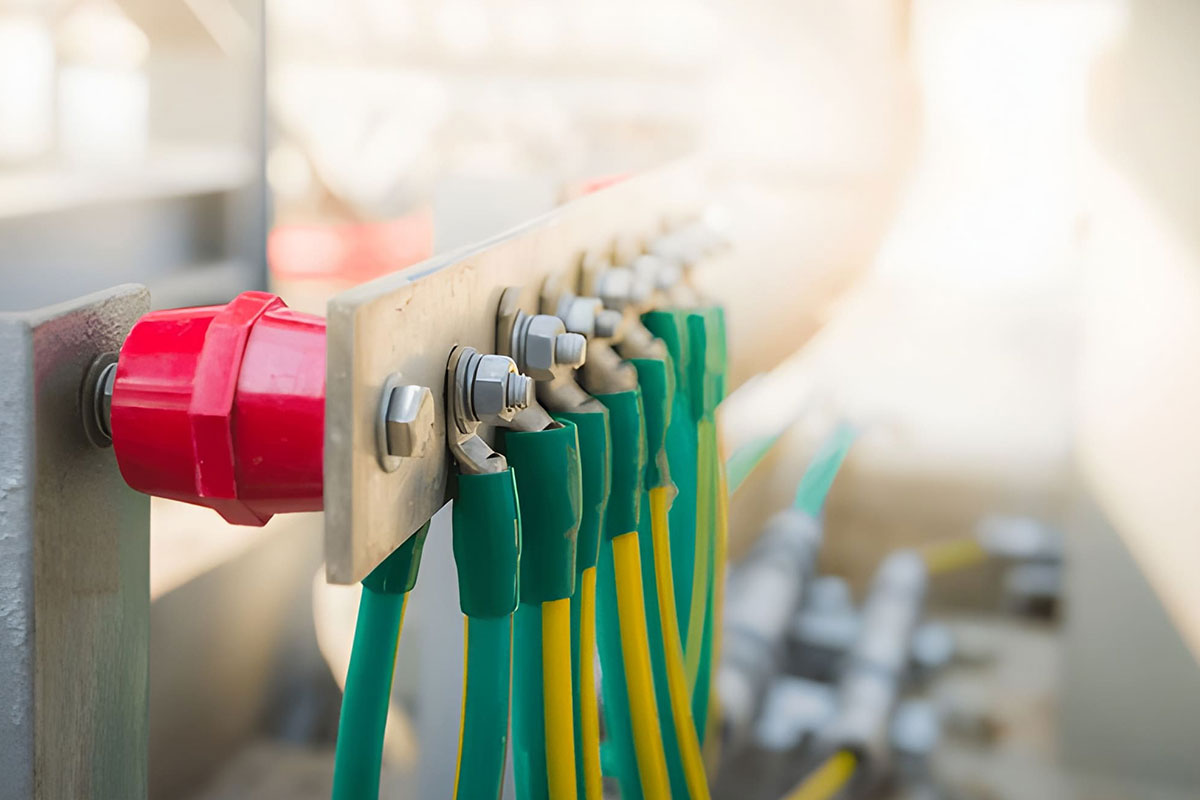
In electrical systems, earthing is one subject everyone agrees is important, but very few get consistently right on site. Whether in residential buildings, commercial complexes, industrial plants or modern smart infrastructure, improper earthing continues to be a silent contributor to equipment failures, nuisance tripping, electrical noise and safety hazards.
Unlike visible components such as cables, panels or machines, earthing disappears underground and behind walls. Once installed, it is rarely inspected again, until something goes wrong. But in reality, earthing forms the foundation upon which the entire electrical system operates safely and reliably.
This article explains what earthing actually is, why it is far more than a regulatory requirement, and how its role has expanded dramatically in modern installations.
What Is Earthing?
Earthing (or grounding) is the intentional connection of electrical equipment and conductive parts to the earth through a low-resistance path.
The primary objectives are:
- To safely dissipate fault currents
- To prevent dangerous touch voltages
- To stabilize system voltage during disturbances
- To provide a reference potential for electrical systems
When insulation fails or a live conductor contacts a metal enclosure, fault current flows through the earthing system instead of through a human body. This allows protective devices such as circuit breakers or relays to operate quickly and isolate the fault. Without proper earthing, even minor faults can escalate into serious hazards.
Why Earthing Is More Critical Today Than Ever?
Traditionally, earthing was considered mainly a safety feature. In modern electrical ecosystems, it is also essential for performance, stability and electromagnetic compatibility.
Today’s installations include:
- Variable Frequency Drives (VFDs)
- PLC-based automation systems
- Sensitive electronic equipment
- High-speed communication networks
- Data centers and monitoring systems
- Renewable energy interfaces
These systems generate switching noise, harmonics and high-frequency disturbances. Poor earthing can lead to erratic operation, communication errors and premature equipment failure. In other words, earthing is no longer just about preventing electric shock, it is about ensuring system integrity.
Protection Against Faults and Fire
One of the most important functions of earthing is enabling protective devices to act correctly. If fault current cannot flow easily to earth due to high resistance or discontinuity:
- Breakers may not trip
- Fault conditions may persist
- Conductors may overheat
- Fire risk increases
In many electrical fire investigations, inadequate earth continuity is a hidden root cause.
Voltage Stabilization and Surge Control
Earthing also stabilizes voltage levels in a system. During lightning strikes, switching surges or insulation breakdowns, large transient currents seek a path to ground.
A well-designed earthing system:
- Limits overvoltage
- Protects insulation system
- Enables surge protection devices to function effectively
- Prevents damage to connected equipment
Without it, surge energy may travel unpredictably through cables and electronics.
The Role of Equipotential Bonding
A critical but often overlooked aspect of earthing is equipotential bonding. Equipotential bonding ensures that all exposed conductive parts – panels, cable trays, structural steel, machine frames and enclosures remain at the same electrical potential.
During a fault condition, this prevents dangerous voltage differences between surfaces that a person might simultaneously touch.
Benefits include:
- Reduced touch voltage risk
- Improved safety during faults
- Enhanced surge protection effectiveness
- Stable reference potential for electronics
Without proper bonding, even a well-designed earth electrode system may not prevent hazardous conditions.
Earthing in Buildings vs Industrial Environments
Residential and Commercial Buildings
In buildings, earthing primarily focuses on human safety and fire prevention. Typical components include:
- Earth electrodes
- Protective earthing of panels and equipment
- Lightning protection systems
- Bonding of metallic services
Modern fire-safe wiring systems further enhance safety by limiting toxic smoke and flame spread.
Industrial Installations
Industrial environments impose far more demanding conditions. Earthing here must handle:
- High fault currents
- Harmonic distortion
- Electromagnetic interference
- Large motor starting current
- Sensitive instrumentation
Separate earthing networks for power systems, control systems and communication equipment are often necessary to maintain operational stability.
Why Earthing Failures Are So Common?
Despite its importance, earthing is frequently compromised because:
- It is invisible after installation
- It is perceived as low priority
- It is often executed late in the project
- Cost cutting focuses on buried infrastructure
- Testing is not repeated over time
Additionally, corrosion, soil resistivity changes and mechanical damage can degrade performance if not monitored.
The Cable and Earthing Relationship
Earthing effectiveness depends not only on electrodes and conductors but also on cable construction. Quality cables contribute to reliable earthing through:
- Stable conductor resistance
- Durable insulation systems
- Effective shielding or armour continuity
- Resistance to environmental degradation
Poor-quality cables can introduce discontinuities, unstable impedance and degradation near termination points, undermining the entire earthing scheme.
Earthing is a System, not a Component
A common misconception is that earthing is simply “connecting to ground.” In reality, it is an engineered system that includes:
- Earth electrodes
- Conductors and bonding networks
- Equipment connections
- Surge protection interfaces
- Cable terminations
- Maintenance and testing provisions
Weakness in any part can compromise overall performance.
Conclusion
Earthing is invisible once a project is complete, but its influence persists for decades. It protects people during faults, preserves equipment during disturbances and ensures stable operation of modern electrical and digital systems.
As electrical infrastructure becomes increasingly complex and interconnected, the margin for error shrinks. Proper earthing is no longer just a compliance requirement, it is a fundamental design discipline.
Because when earthing is done right, nothing happens. When it is done wrong, everything does.
Note: Images are sourced from Google and used only for educational reference

 Back
Back