

Floating Solar Is Rising – Are the Cables Ready for Water?
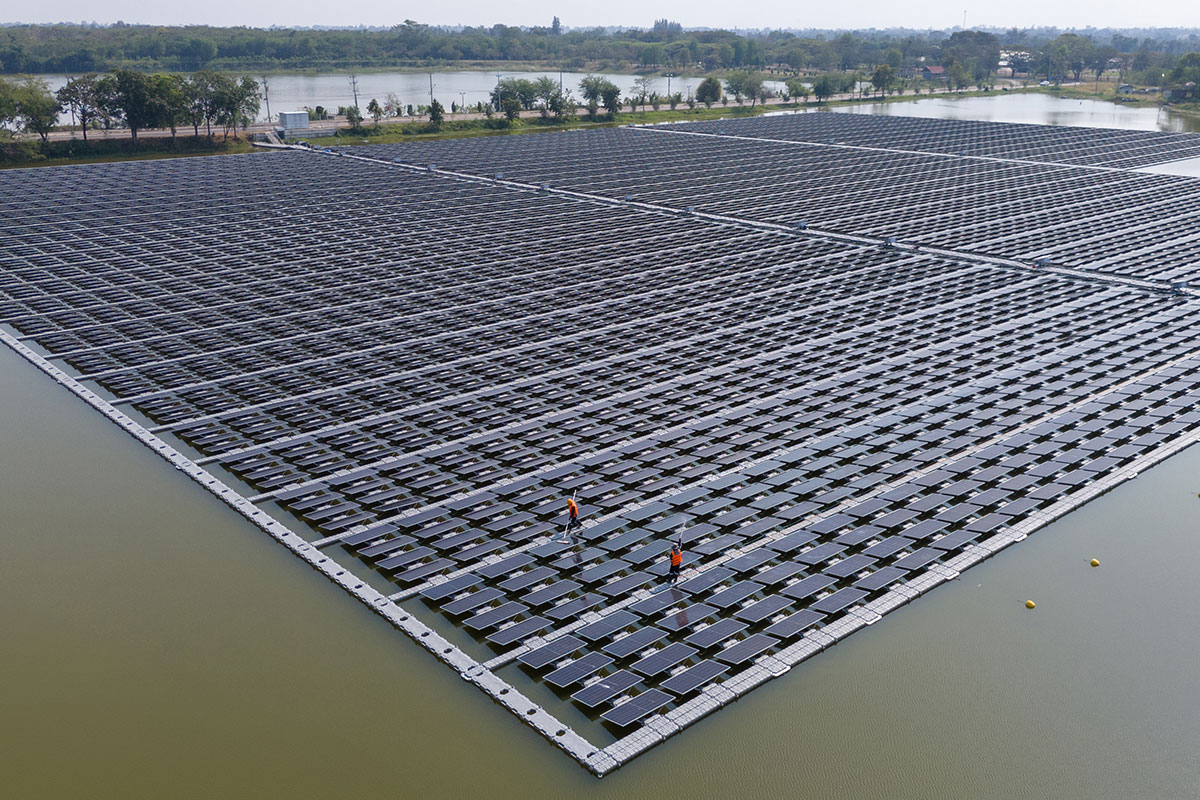
Solar power is rapidly reshaping India’s energy landscape but what happens when land becomes scarce and expensive? The next chapter of renewable energy brings a remarkable answer: Floating Solar Power Plants. Once considered experimental, floating solar is now emerging as one of the most efficient, scalable and forward-looking clean energy solutions.
Across India from reservoirs to lakes to industrial water bodies, floating solar is gaining momentum. It conserves land, boosts energy efficiency and creates value from unused water surfaces. But while the concept seems simple on the surface, its success depends on one critical, often ignored element which is the underwater cables that carry the power.
These cables quietly ensure the plant runs safely and reliably for decades. And for floating solar, only one specification truly guarantees that reliability - AD 8 compliant DC solar cables.
Why Floating Solar? The User-Friendly Advantages
Floating solar (also called FPV - Floating Photovoltaics) offers several powerful benefits that make it attractive for governments, developers, utilities and customers:
1. No Land Required: Land is one of the biggest challenges in large solar projects. Floating solar solves it completely by using Reservoirs, Dam backwaters, Lakes, Industrial ponds, Water treatment plants. This reduces land acquisition, civil works and environmental impact.
2. Higher Power Generation: Water naturally cools solar panels from below. This reduces panel temperature which is otherwise a major cause of efficiency loss. As a result, floating solar systems can deliver 5-12% higher output than ground-mounted systems.
3. Lower Evaporation Losses: Covering the water surface drops evaporation by 30–70%, saving precious water in drought-prone regions.
4. Reduced Algae Bloom & Healthier Water: Shaded areas slow down algae growth, improving water quality.
5. Faster Deployment: The modular design of floats and anchoring systems makes installation quicker and easier compared to land-based solar parks.
Floating solar isn’t just an alternative, it’s becoming a strategic choice for regions aiming for energy security, water conservation and environmental improvement.
The Real Challenge: Water + Electricity = Demanding Conditions
In floating solar, cables run underwater, sometimes fully submerged for years. And water is one of the harshest environments for any electrical system.
Submerged cables face:
- Water ingress over time
- Constant humidity and pressure
- Temperature variations
- Chemical contamination (minerals, algae, microbes)
- Movement due to waves and wind
- Potential abrasion against floating structures
- Rodent / aquatic organism attack
- Strong UV exposure at the water line
A cable that performs well on land may fail much sooner underwater, which can cause:
- Short circuits
- Power loss
- System downtime
- Damage to panels, inverters and floats
- Fire hazards
- Costly cable replacement (which requires divers and shutdowns)
This is why floating solar requires a different level of cable reliability. This is where AD8 compliance becomes non-negotiable.
What Is AD8 Compliance and Why Does It Matter?
In cable engineering, AD1 to AD8 represent levels of water exposure. AD8 is the highest possible category, certified for continuous, long-term submersion. An AD8-compliant cable guarantees:
- No water penetration into insulation over years
- Mechanical strength even after long water exposure
- Electrical stability under submerged conditions
- Resistance to microbial and chemical attack
- Zero compromise in safety for the entire plant
If a floating solar project is not using AD8 compliant cables, it is at risk from Day 1. AD8 isn’t a feature, it’s the safety foundation for solar installations on water.
Why Underwater Cables Fail and How AD8 Solves It
A floating solar plant may look quiet and still, but the underwater environment is dynamic. Here’s what typically goes wrong with non-AD8 cables:
- Water Entering the Cable Jacket: Over months, water diffuses into the insulation, causing insulation failure.
- Copper Blackening and Oxidation: Moisture accelerates conductor degradation, leading to increased resistance.
- Cracks Due to Thermal Cycling: Sun + water creates temperature swings that can crack poor-quality jackets.
- Microbial Attack: Certain bacteria eat into PVC-based cables.
- Breakdown Under Constant Pressure: Depth and pressure cause mechanical deformation over time.
AD8-compliant cables are designed, tested and certified to withstand all these stresses.
RR Kabel’s Advantage: AD8 Compliant DC Solar Cable
Floating and water-adjacent solar projects demand cables that go beyond standard outdoor performance. RR Kabel’s DC solar cables are specifically engineered to meet AD8 (water submersion) requirements making them reliable for long term usage. These cables are:
- Suitable for floating solar, canal-top solar and high-humidity coastal sites.
- Manufactured using electron-beam cross-linked insulation.
- Highly resistant to thermal stress, UV exposure, chemicals, microbes and moisture.
- Designed for 25+ years of service life.
For users, EPC contractors, developers and utilities, this ensures predictable long-term performance.
Floating Solar Is the Future when installed with the Right Cables
The world is moving toward clean energy, and floating solar will play a major role in India’s renewable expansion. But technology alone does not ensure success, reliability does. And reliability begins with the right cables. Floating solar sites face unique, harsh conditions. That’s why AD8-compliant cables are not just technical recommendations, they are the backbone of plant safety and uptime.
As India builds the next generation of water-based solar projects, the cables beneath the surface will define the performance above it. And with RR Kabel’s AD8-ready solar cables, developers can build confidently, knowing the system is protected, stable and ready for the future.
Note: Images are sourced from Google and used only for educational reference

 Back
Back